Capsular Contracture







When you get breast implants, your body naturally forms a protective lining around them. In most patients, this thin capsule stays soft and causes no problems.
Sometimes, however, the scar tissue can tighten around the implant, causing the breast to feel firm, look different, or become uncomfortable. This complication is known as capsular contracture. At Delatte Plastic Surgery, Skin Care, and Wellness, Dr. Stephen Delatte offers surgical treatment for capsular contracture. His goal is to relieve discomfort, improve the shape and softness of the breast, and help you feel confident in your results again.
Any time a foreign object enters the body, the body naturally responds by forming scar tissue around it. With breast implants, this capsule is a normal part of the healing process and can actually help keep the implant in the correct position.
Capsular contracture occurs when that scar tissue becomes unusually thick or tight and begins to squeeze the implant. This can make the breast feel firm or hard and may cause changes in its shape, position, or symmetry. More advanced cases can also become uncomfortable or painful.
Capsular contracture can occur with different types of breast implants and may develop months or even years after breast augmentation or reconstruction.
Doctors grade the severity of this condition on a standard four-point scale. Mild cases (Grades I and II) might feel slightly firm to the touch but look completely normal. Severe capsular contracture (Grades III and IV) involves visible distortion, a rock-hard feel, and constant aching. Depending on your individual case, Dr. Delatte may recommend removing the scar tissue surrounding the implant, releasing the tightened capsule, replacing the implant, or a combination of techniques.

For patients experiencing discomfort or changes in their breast implants, correction can help restore both comfort and appearance.
Potential benefits of treating capsular contracture include:
Every revision is different, which is why Dr. Delatte creates a surgical plan based on your anatomy, symptoms, current implants, and aesthetic goals.
You are likely a good candidate for Lafayette Capsular Contracture surgery if you experience pain, unnatural firmness, or a visible shift in the position of your implants. During your consultation, Dr. Delatte will review your medical history and examine your chest to determine the severity of the issue.
Several factors may contribute to capsular contracture, including inflammation, infection, bleeding or fluid around the implant, and previous radiation therapy. In some cases, there may not be one clear cause.
If there is concern about the condition of your implant, Dr. Delatte can also determine whether additional evaluation or imaging may be appropriate.

Capsular contracture correction is performed under general anesthesia. Depending on the severity of the scar tissue and the condition of the implant, Dr. Delatte may remove the capsule entirely, release the tightened tissue, replace the implant, or combine these techniques.
When appropriate, he may be able to use your existing breast augmentation incision to avoid creating additional scars. The surgical plan is completely based on your anatomy, symptoms, implant position, and whether you want to keep, replace, or remove your implants.

The recovery process after capsular contracture correction varies depending on the extent of your procedure and whether your implants are removed or replaced.
Following surgery for capsular contracture Lafayette patients can expect some swelling, soreness, and tightness. You may also wear a supportive surgical bra as your breasts heal.
When possible, Dr. Delatte may be able to use your existing breast augmentation incisions to help minimize additional scarring. Most patients can gradually return to light daily activities within the first couple of weeks, but heavy lifting and strenuous exercise will be restricted during the early stages of recovery.
You will receive personalized post-operative instructions and follow-up care from our team throughout your recovery.
Most patients experience soreness and mild inflammation for the first week. We prescribe medication so your pain is easily managed at home.
After the tightened capsule has been treated and post-surgical swelling in the tissues begins to resolve, the breast should gradually feel softer and appear more natural.
The goal of surgery is to improve comfort, shape, symmetry, and the overall appearance of the breast. While capsular contracture can recur after treatment, Dr. Delatte will discuss surgical techniques and recommendations, such as subpectoral placement (placing the implant under the chest muscle), to keep that risk as low as possible.




Breast revision surgery often requires a different level of planning than an initial breast augmentation. Each patient may have different implants, scar tissue, anatomy, and concerns that need to be considered.
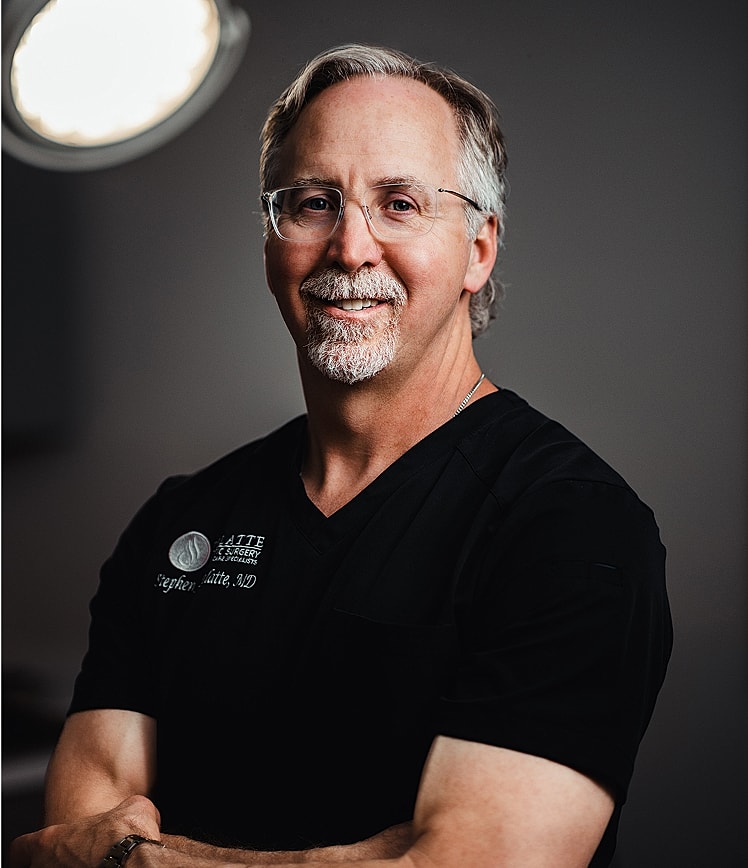
Dr. Stephen J. Delatte is a board-certified plastic surgeon with extensive experience in breast surgery and complex breast revision procedures. He takes the time to evaluate what is causing your concerns and creates an individualized surgical plan designed around your anatomy, comfort, and aesthetic goals.
At Delatte Plastic Surgery, Skin Care, and Wellness, our goal is to make sure you feel informed and comfortable throughout the entire process—from your initial consultation through your recovery.
Capsular contracture itself is not breast cancer. It is a tightening of the scar tissue that naturally forms around a breast implant.
However, any new or concerning breast changes should be evaluated by a qualified medical provider. Dr. Delatte can assess your symptoms and recommend additional evaluation when appropriate.
Yes. Capsular contracture can occur after implant-based breast reconstruction as well as cosmetic breast augmentation. Patients who have undergone radiation therapy may have an increased risk of developing capsular contracture.
Capsular contracture is generally considered a localized response involving the scar tissue around a breast implant. If you have an autoimmune condition or other health concerns, be sure to discuss them with Dr. Delatte during your consultation so they can be considered when developing your treatment plan.
Not necessarily. Your options will depend on your implants, anatomy, symptoms, and personal goals.
Some patients choose to replace their implants during capsular contracture correction, while others may decide to remove their implants without replacement. Depending on your anatomy, a breast lift or another procedure may also be considered to help achieve your desired result.
Trauma that causes bleeding or significant inflammation around a breast implant may potentially contribute to changes within the implant pocket. If you notice new firmness, pain, swelling, or a change in breast shape following an injury, it is important to have the area evaluated.
Treatment depends on the severity of the contracture and your symptoms. Mild cases may sometimes be monitored or managed conservatively. For more advanced capsular contracture involving significant firmness, distortion, or discomfort, surgical treatment may be recommended.
The best way to determine your options is through an in-person evaluation with a board-certified plastic surgeon.
The latest in breast cancer treatment, removal, and reconstruction now serving Acadiana